
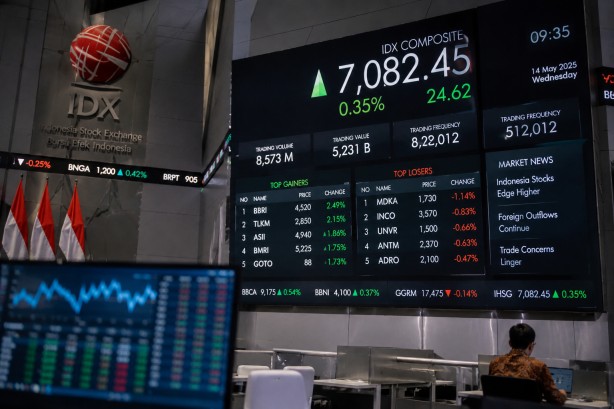
Indonesia’s financial landscape saw a positive shift as the Jakarta Composite Index (JCI) climbed by 0.34% in the week leading up to July 24. This rise came amid increased trading activities, even as the market grappled with persistent foreign investor outflows and a backdrop of global economic uncertainties. The market capitalization of the Indonesia Stock Exchange reached Rp 10,870 trillion, with average daily trading turnover experiencing a notable 41% surge to Rp 19.76 trillion.
Despite the positive trading momentum, foreign investors continued to withdraw, contributing to a cumulative outflow of Rp 79.09 trillion thus far this year. This trend highlights a cautious stance by foreign investors towards Indonesian assets, driven by various external pressures. Among these pressures are escalating global oil prices, spurred by heightened tensions in the Middle East, and the imposition of new tariffs by the United States on imports from several trading partners, including a 10% tariff on specific goods from Indonesia.
The rising oil prices present a potential challenge for Indonesia’s fiscal strategy, as acknowledged by the country’s Finance Ministry. Officials noted that any increase in oil prices could place additional strain on the state budget projected for 2026. Nevertheless, the ministry assured that Indonesia’s overall fiscal position remains stable, suggesting a level of resilience in managing these external economic pressures.
Market observers continue to watch how these dynamics will play out in the coming months, particularly in light of ongoing geopolitical developments and trade policies. The interplay between local trading enthusiasm and cautious foreign investment reflects a complex economic environment that Indonesia navigates as it seeks to maintain stability and growth.
As the global economic landscape evolves, Indonesia’s ability to manage its fiscal health while attracting sustained foreign investment will be crucial. The current situation underscores the importance of strategic economic policies that can bolster investor confidence and support continued market expansion, despite the prevailing uncertainties.