
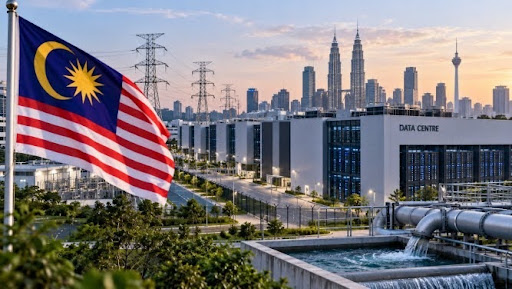
Malaysia is witnessing a surge in data-centre and cloud-computing investments, driven by the growing demand for artificial intelligence, cloud services, and digital applications. This rapid expansion is opening up new avenues for employment and local business partnerships, while simultaneously exerting pressure on the nation’s infrastructure such as electricity and water supply. In the first half of 2026, the country approved RM95.8 billion in investments in these sectors, which represent nearly 44% of Malaysia’s total approved investments during that period. Johor and the Klang Valley have become key areas for the establishment of new facilities.
The boom in the data-centre sector is fueling a need for skilled workers in various fields, including data science, engineering, cybersecurity, telecommunications, and construction. Additionally, Malaysian companies have the opportunity to provide essential services like construction, engineering, and electrical work to support these projects. However, the continuous operation of data centres requires substantial electricity, with demand in Peninsular Malaysia reaching 849 megawatts in December 2025 and expected to climb to 4,811 megawatts by 2030. In response, the government plans to add up to 9,600 megawatts of power-generation capacity between 2028 and 2031 to meet this growing demand and replace ageing facilities.
Authorities are also reviewing electricity-use projections from proposed data centres to avoid unnecessary infrastructure investments and manage additional costs effectively. Alongside electricity, data centres utilize significant amounts of water for cooling systems. To address this, authorities are pushing for the use of reclaimed and alternative water sources rather than relying solely on treated drinking water. Johor has announced plans to supply up to 12 million litres of reclaimed water daily for cooling purposes, with similar initiatives underway in the Klang Valley.
The Malaysian government has set regulations requiring new data-centre projects to prove adequate power and water supplies while adhering to energy-efficiency standards. Data centres are expected to meet specified Power Usage Effectiveness (PUE) targets, with colocation facilities limited to a PUE of 1.6 and hyperscale operators limited to 1.4. These measures aim to ensure the sustainable growth of the data-centre industry in Malaysia, balancing economic and employment benefits with the careful management of resource demands.
As Malaysia’s data-centre industry continues to expand, authorities are increasingly focused on ensuring that this growth does not impose excessive strain on the country’s electricity and water resources. The strategic focus on sustainability and efficient resource management is crucial for maintaining the industry’s long-term viability and its contribution to the national economy.