
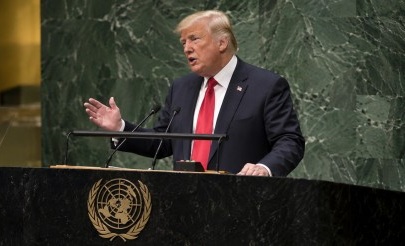
In a speech at the United Nations General Assembly, U.S. President Donald Trump proposed renaming artificial intelligence as “super intelligence” in future government documents, arguing that the term “artificial” undermines the technology’s potential. Trump’s suggestion aims to reflect the powerful capabilities of AI more accurately.
Trump also opposed international regulations on AI, dismissing concerns about its dangers as exaggerated. He emphasized that the U.S. would not support a global system to control AI development, asserting that the technology’s economic impact could surpass that of previous technological revolutions.
As AI continues to evolve, governments and tech companies are grappling with how to manage these advanced systems. Over 20 political leaders have recently advocated for stronger international collaboration, safety testing, and standardized practices for AI.
In addition to rebranding AI, Trump introduced the idea of creating an “AI Force” and appointing an AI czar to oversee the technology within the United States. However, details on how this structure would function remain limited.
The term “superintelligence” is already recognized in AI research as describing a hypothetical system with intellectual capabilities far surpassing human intelligence. Trump’s proposed usage seeks to broaden the term’s application to encompass artificial intelligence as a whole.