
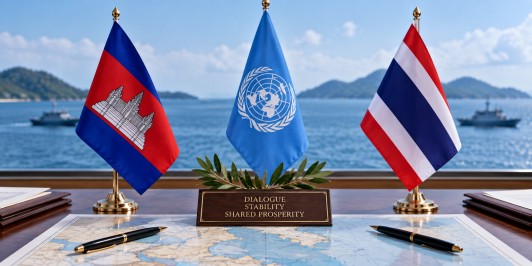
Cambodia and Thailand have embarked on a United Nations-supported conciliation process to address a longstanding maritime boundary conflict in the Gulf of Thailand. The initiative is guided by the United Nations Convention on the Law of the Sea (UNCLOS), with foreign ministers from both nations presenting their initial remarks at the opening session. The core of Cambodia’s approach is to establish a definitive maritime boundary with Thailand. Additionally, Phnom Penh has suggested a joint development strategy that would enable both countries to exploit the resources within the contested zone collaboratively.
Thailand, on the other hand, has emphasized that the discussions should solely revolve around maritime boundary delimitation. Bangkok has affirmed its commitment to participating in this process with sincerity, although it previously advocated for resolving the issue through direct bilateral talks. The contested area, spanning approximately 26,000 square kilometers, is believed to be rich in natural gas and oil reserves, thus holding significant economic value for both nations.
Historically, a 2001 agreement had set the stage for cooperative resource development within the disputed waters. However, this arrangement came to a halt in May after Thailand withdrew, citing escalating tensions due to deadly border skirmishes between the two countries. Consequently, Cambodia initiated the compulsory conciliation procedure under UNCLOS in June, seeking an amicable resolution to the maritime dispute.
The conciliation process involves an independent panel tasked with providing recommendations. While the panel’s findings are not legally binding, they offer a framework that both countries can consider in seeking a mutually beneficial resolution. This initiative marks a crucial step in resolving a conflict that has persisted for over 25 years, with the potential to significantly impact the region’s economic landscape if the underlying issues can be amicably addressed.